
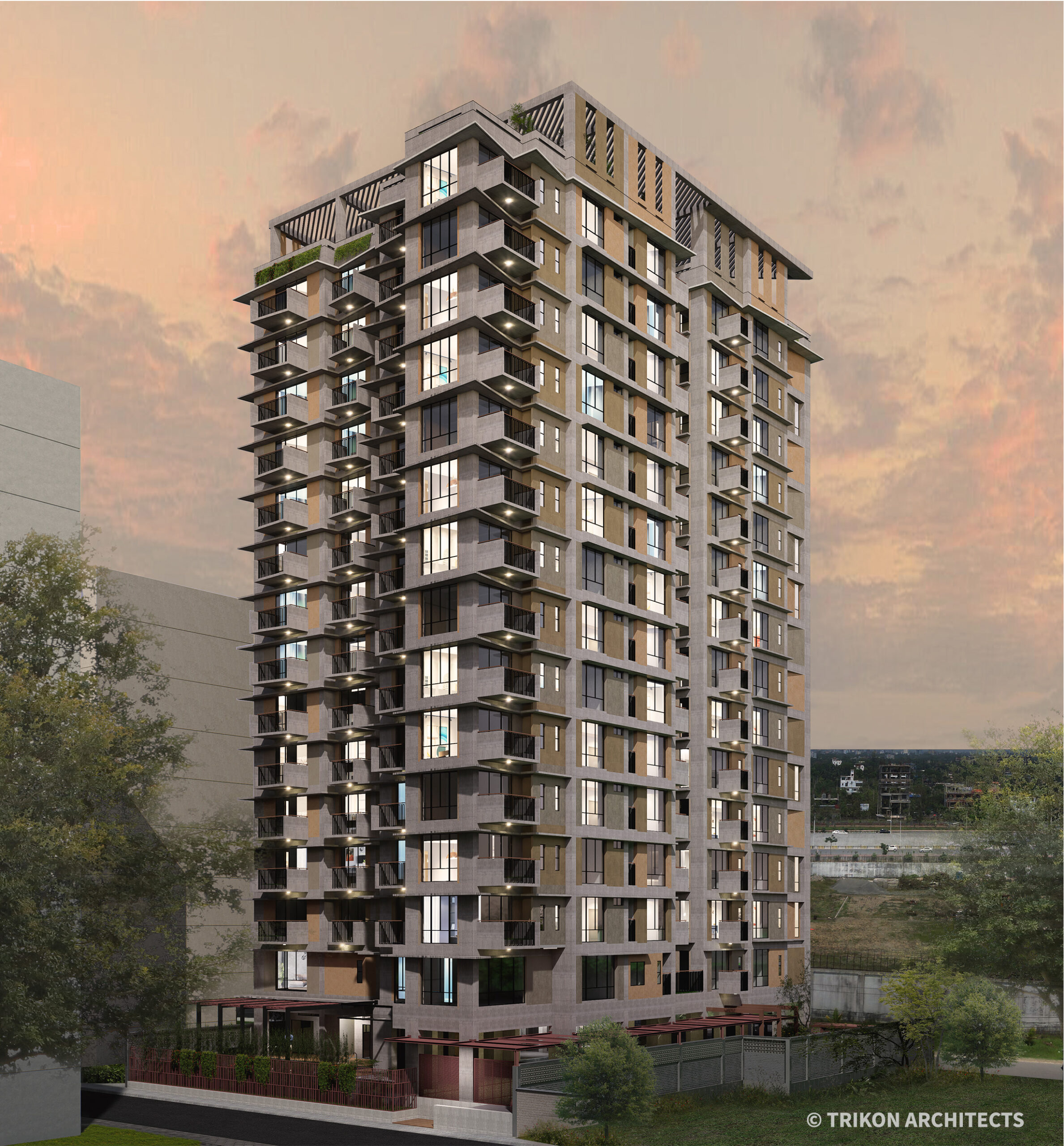
Vertical housing is a modern city solution. It optimizes the use of space by building upwards. It addresses the challenges brought by the rise in population and urbanization. It offers sustainable and efficient alternatives to horizontal expansion. Here are some main advantages of vertical housing given below. Focusing on the development of cities, the environment, and improved quality of life.
- Economical Land Use: Vertical housing has made optimal use of limited land in cities. In doing so, it ensures minimal urban sprawl. It keeps green open areas or agricultural land from being held by buildings. This helps growth without intruding on city’s natural environment or harming biodiversity and ecological balances.
- Economical Use of Infrastructure: Centralized housing reduces the need to spend on infrastructure setup and its maintenance. For example, services like water supply, electricity, and waste collection or disposal are cheaper. It is easier to provide in densely populated areas. Developers benefit from maximizing units on a single plot. While cities save on extensive road networks and utility installations. The decreased need for sprawling infrastructure has made vertical housing an affordable choice for urban development.
- Improved Accessibility: Most of the vertical housing projects are strategically located. They are located near places of work, schools, and other essential services. It minimizes travelling time for residents. This close proximity to most facilities promotes a convenient lifestyle. It does not have the need to travel far to access certain services. Also, most vertical housing projects have mixed-use development. It has shopping areas, gyms, and recreational facilities integrated within living spaces.
- Environmentally Sustainable: The vertical housing condenses population growth. It is reducing urban sprawl that could lead to deforestation and a loss of natural ecosystem. Residents are encouraged to use either public transportation or walk. Thereby, reducing their carbon footprint. Many modern vertical housing complexes include energy-efficient technologies like solar panels, rainwater catchment systems, and green roofs. It furthers contribute to being environmentally sustainable.
- Creating Community: High-rise dwellings foster community living through spaces at the common lobbies, play rooms, playgrounds, and parks. In such places, high-rise building residents feel urged to share some thoughts that might grow into solid inter-relational bonds. Within high-rise complex development, where events are held concerning everything in it. Deeper contact may take place that bonds them to one family nucleus. Including both privacy-seeking adults and individuals.
- Improved Safety: Many vertical housing projects have large-scale security arrangements. Including access control, CCTV cameras, and security personnel. Features like these make living within the premises much safer compared to low-density neighborhoods. The closeness of communities in vertical housing adds a new dimension to safety. Since people know each other better and look after their neighbours.
- Urban Aesthetics: High-rise buildings add to the architecture of cities. The contemporary designs for vertical housing pay more attention to natural lighting, energy efficiency, and view appeal. Thus, beautifying the skyline and giving cities more culture. High-rise residential buildings often turn into landmarks reflecting city progress and development.
- Reduced Commuting Stress: Vertical housing is centrally located. Travelling to work, educational institutions, or even daily needs becomes shorter. Residents have less stress and save on transportation. This shift in lifestyle further contributes to lesser congestion and air pollution. Which benefits not only the individuals but also the greater community.
- Economic Benefits: Vertical housing stimulates local economics. It attracts businesses and jobs. Concentration of residents thus creates demand for retail outlets, restaurants, and a host of other services. Higher population density also raises tax revenues. It can be reinvested in better infrastructure and public amenities.
- Versatile Living Options: High-rise developments, offering varied option for every category from affordable apartments to high incoming penthouses. It shows varied diversities in demographics. Vertical living has become flexible, functional, and pleasing. They range from mixed residential and commercial to recreational spaces combined within. It is being done across cities.
Vertical housing is an innovative solution to urban challenges. It efficiently using land, ensuring environmental sustainability, and improving living conditions. It creates vibrant spaces that combines convenience, safety, and community. It welcomes population growth without harming the environment. As cities keep growing, vertical housing has emerged as a practical and viable way forward. It balances modern needs with ecological preservation.
Author: Sarah Mubas-Sirah









Leave A Comment