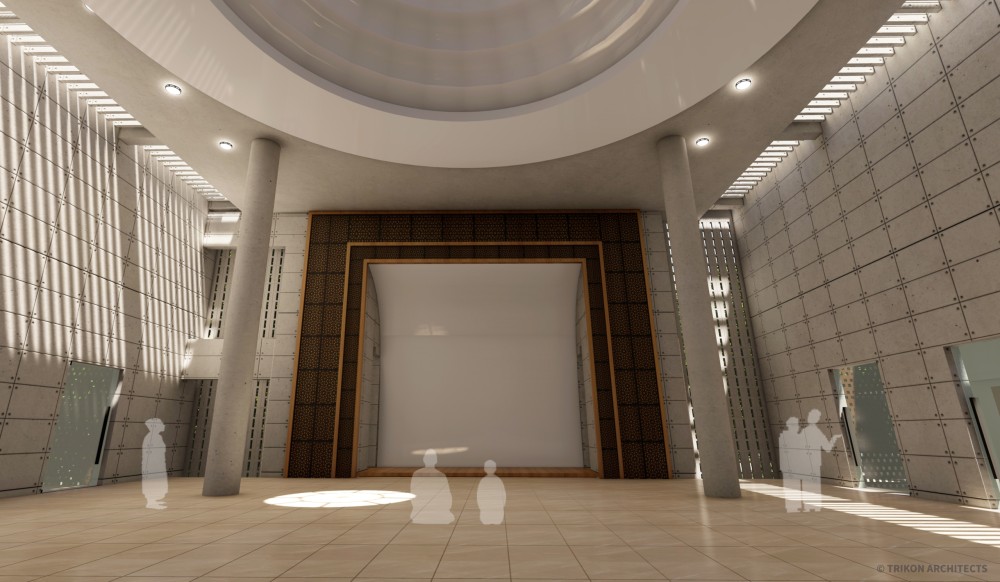

Masjid Al-Wahda
Pathanbari, Fenchuganj, Sylhet
Site Area: 19.87 Katha
Build Area: 22,300 Sft
Year Designed: 2022
Team Leader: Ar. Shafique Rahman (MIAB)
Design Team: Ar. Shanila Saifullah (AMIAB), Ar. Niaz Morshed (AMIAB)
3D Visualizer: Motahar Hossain
Documentation Team: Ar. Mashkura Chowdhury (MIAB), Tasmia Tabassum (AMIAB)
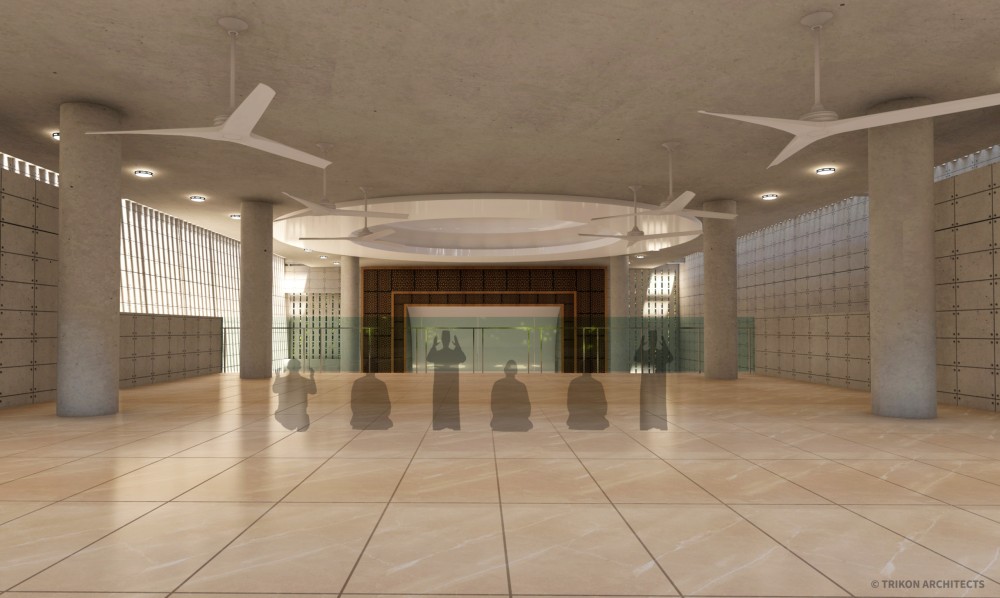
Prayer is a devotional act. With all the distractions in our modern hectic lives, it can be challenging to quiet the mind and seek inner peace to allow for full immersion into prayer. A mosque is a sacred space that pulls people closer to the divine, a form with its own spirituality by fostering a quiet and serene environment.
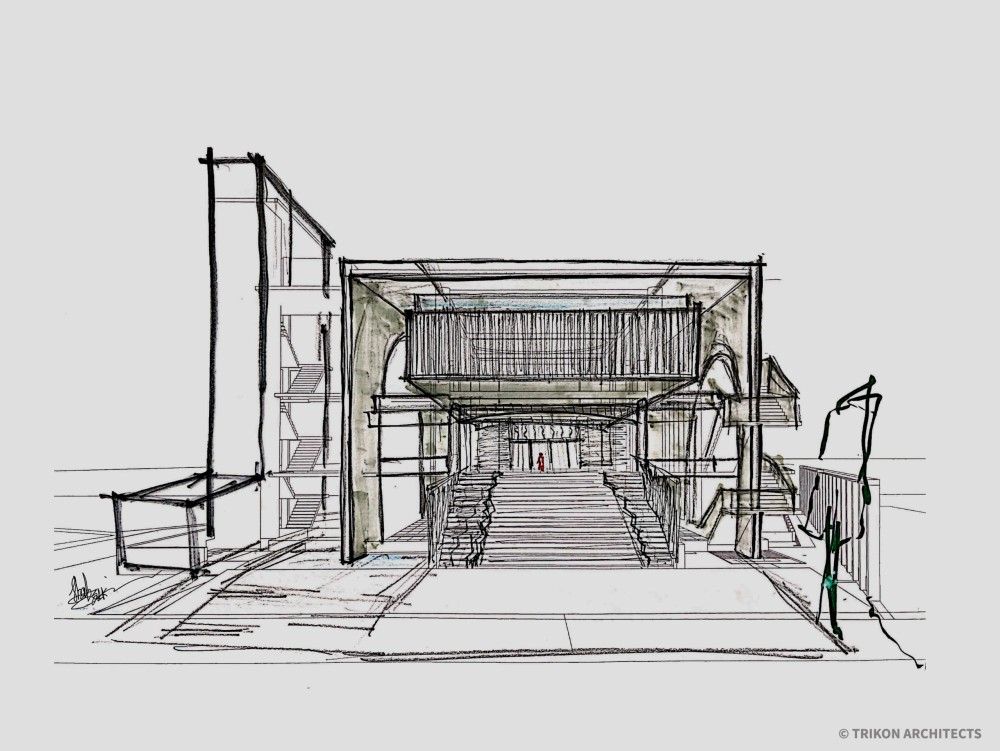
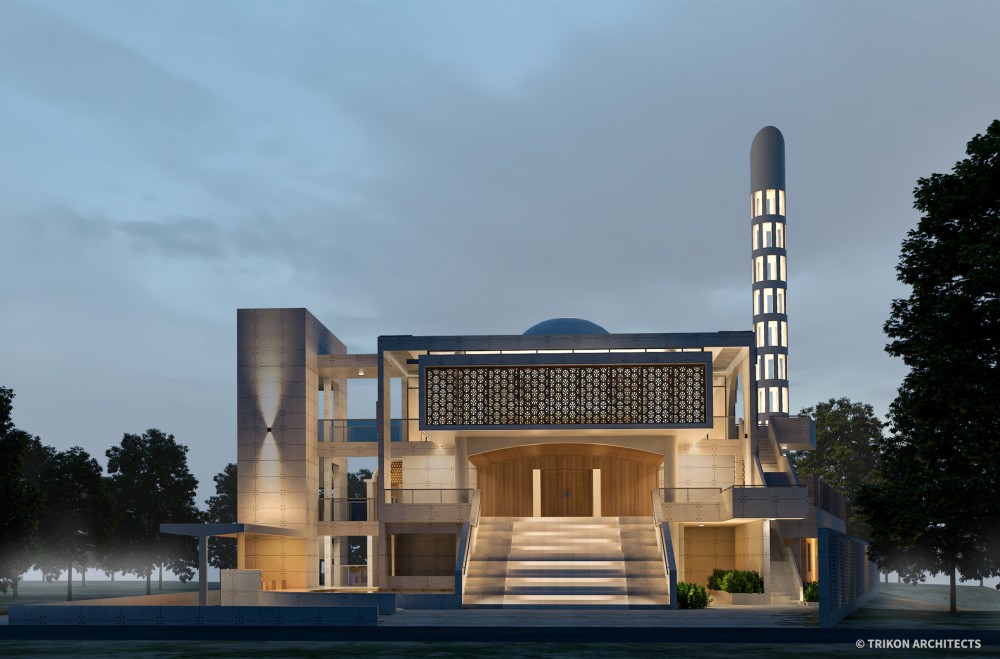
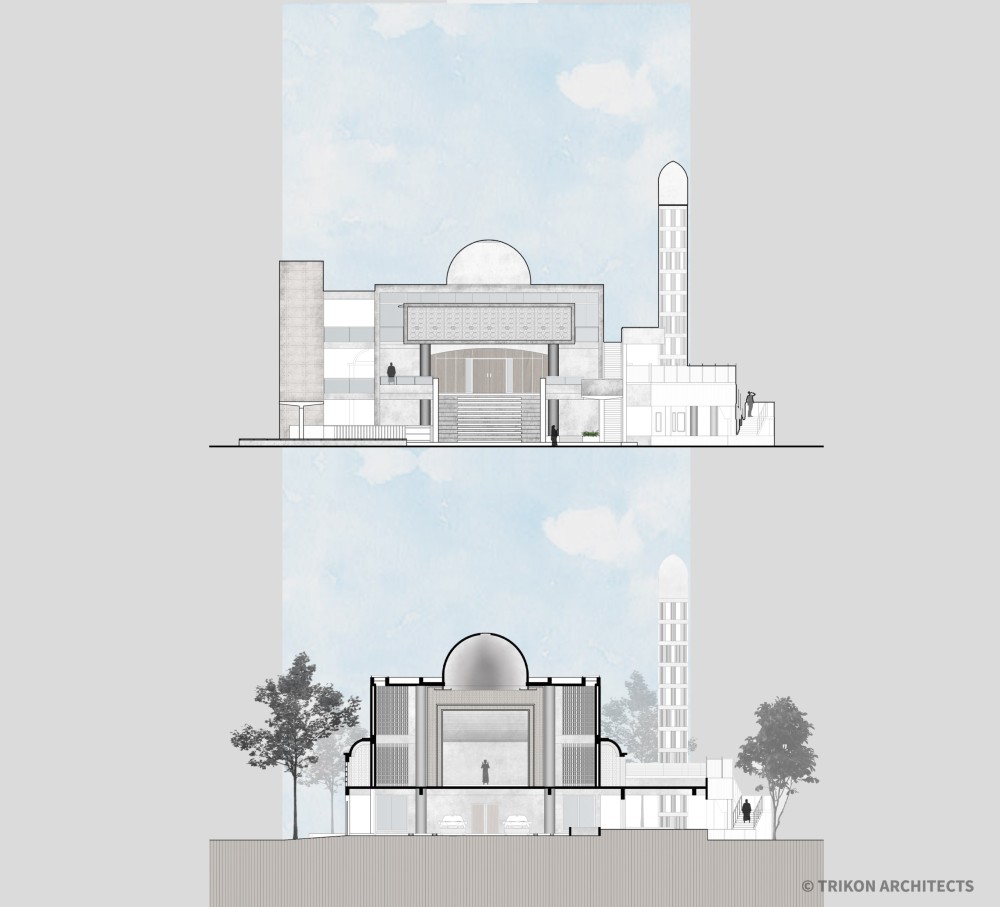
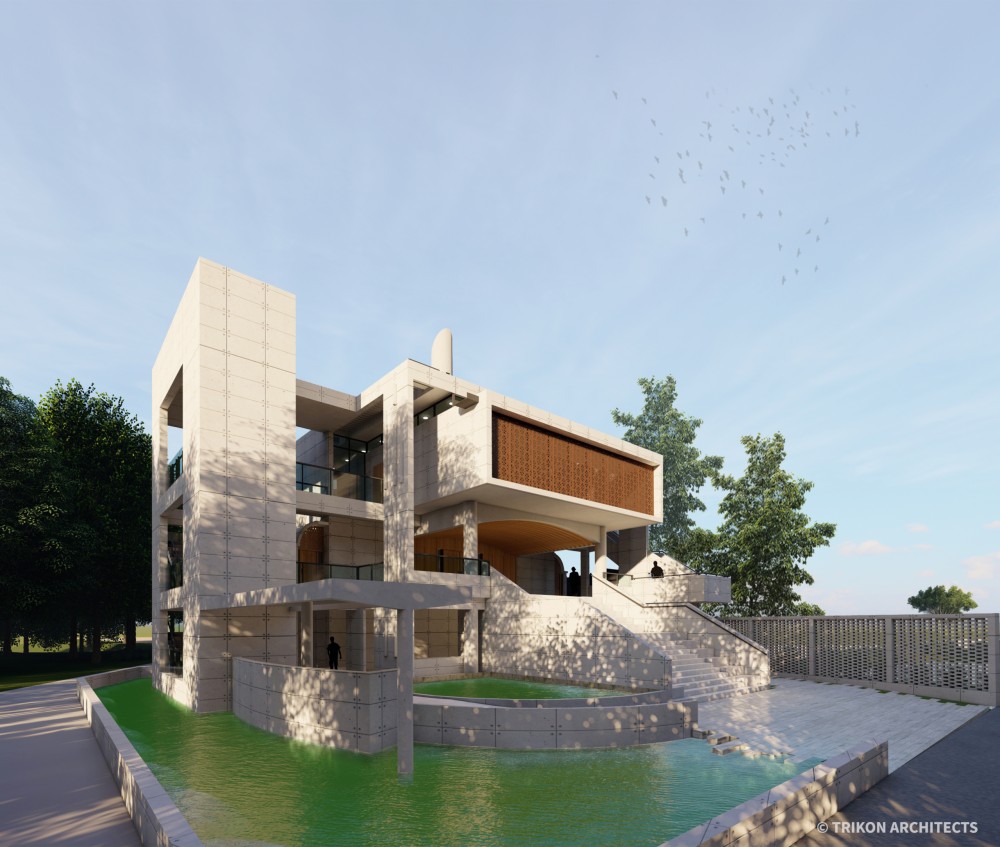
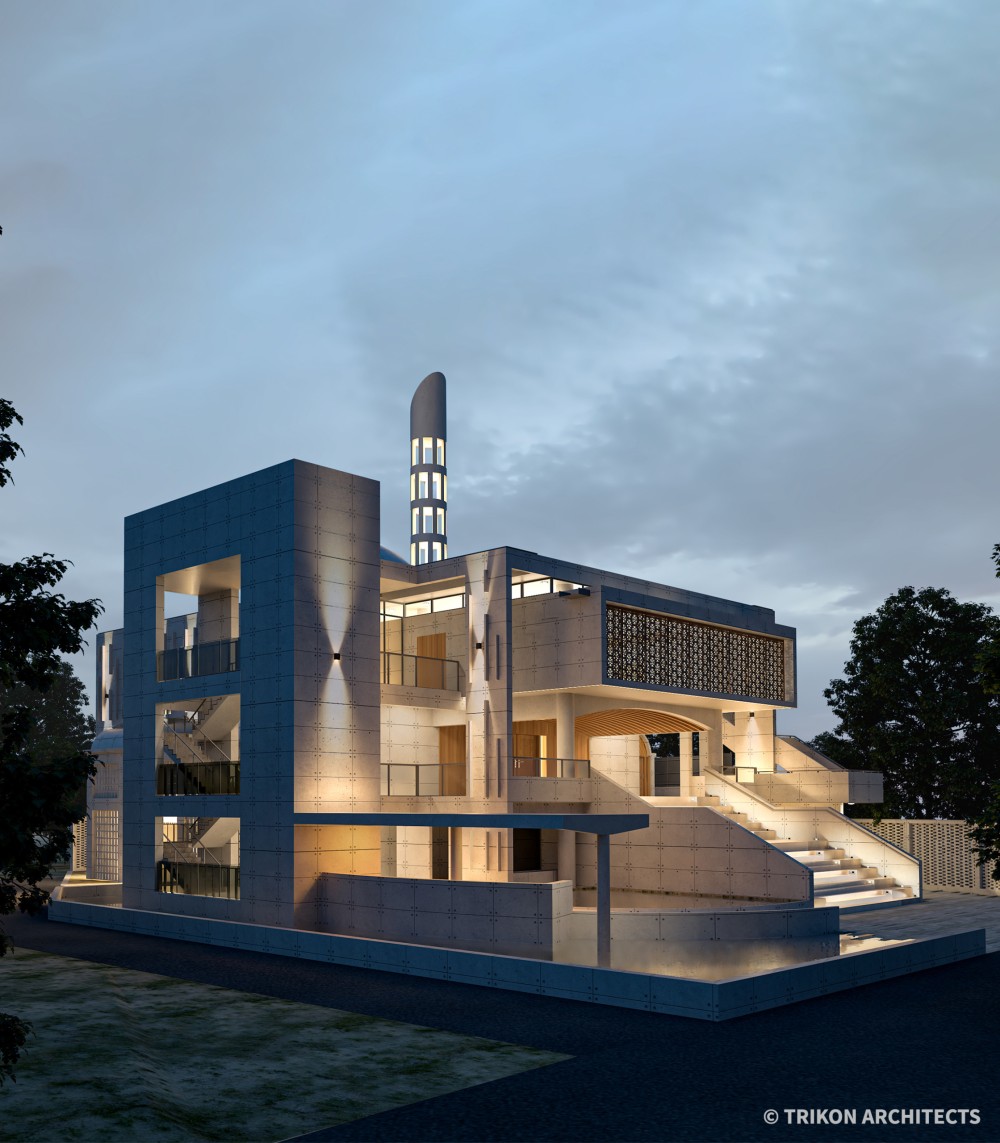
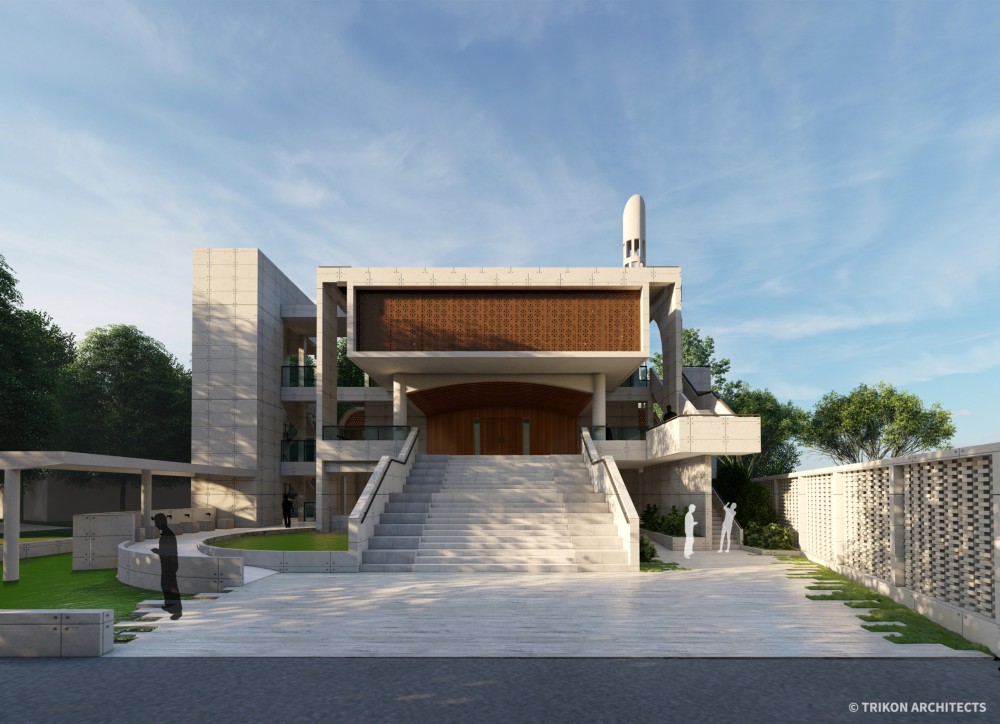
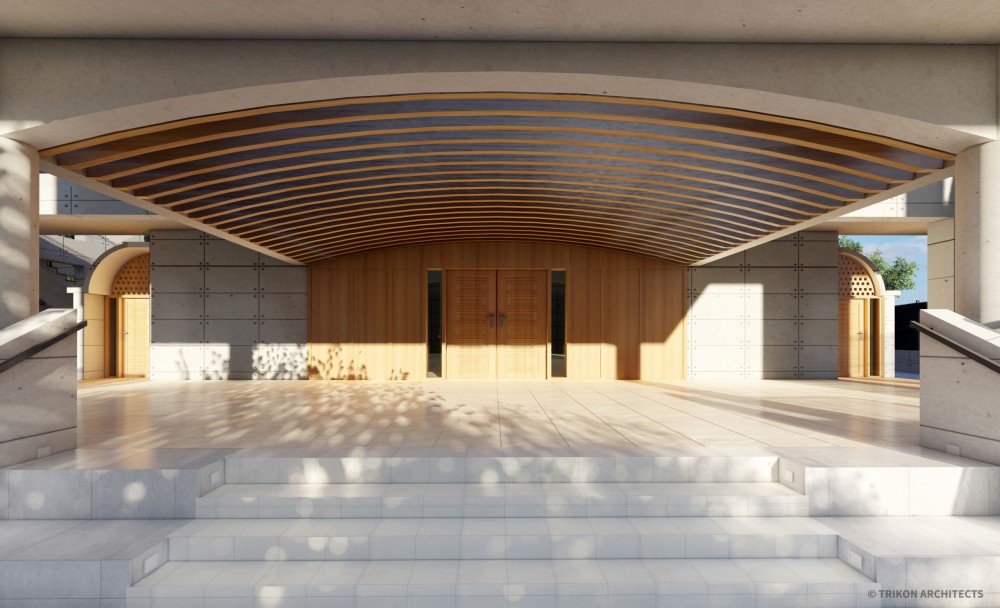
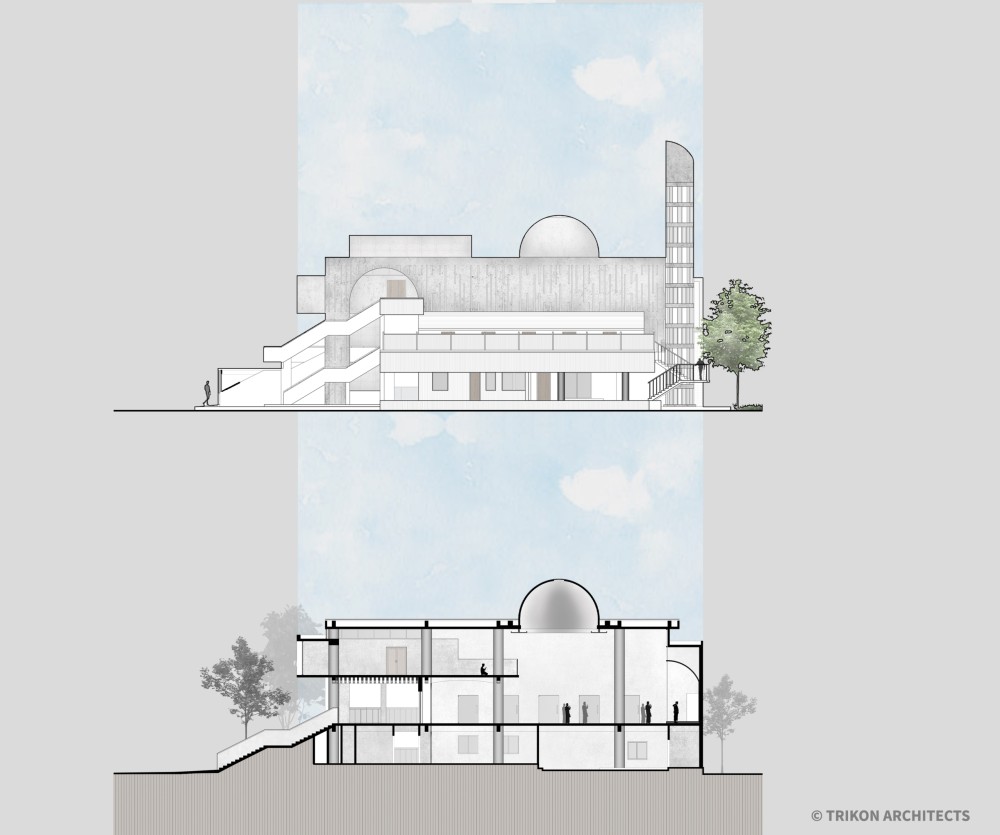
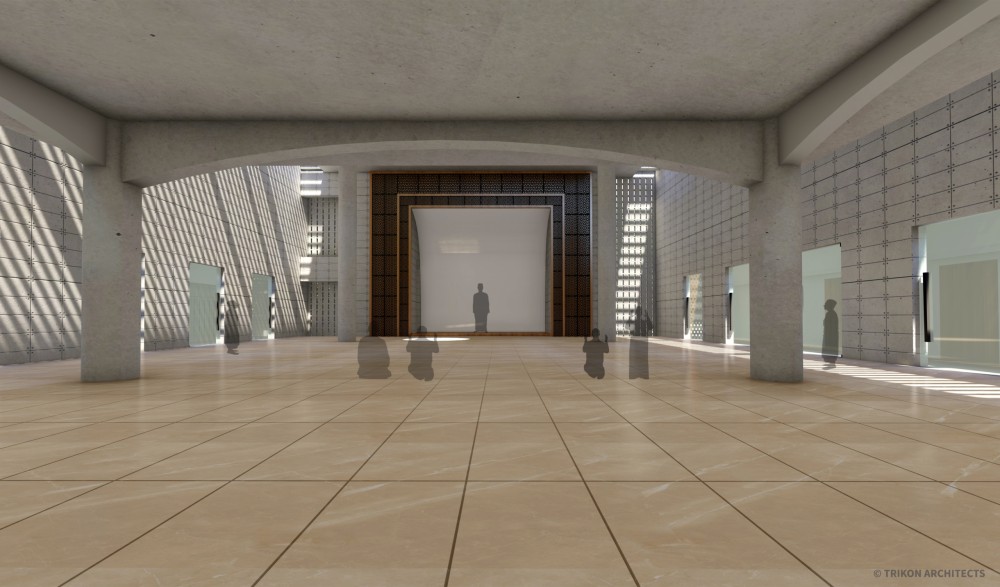
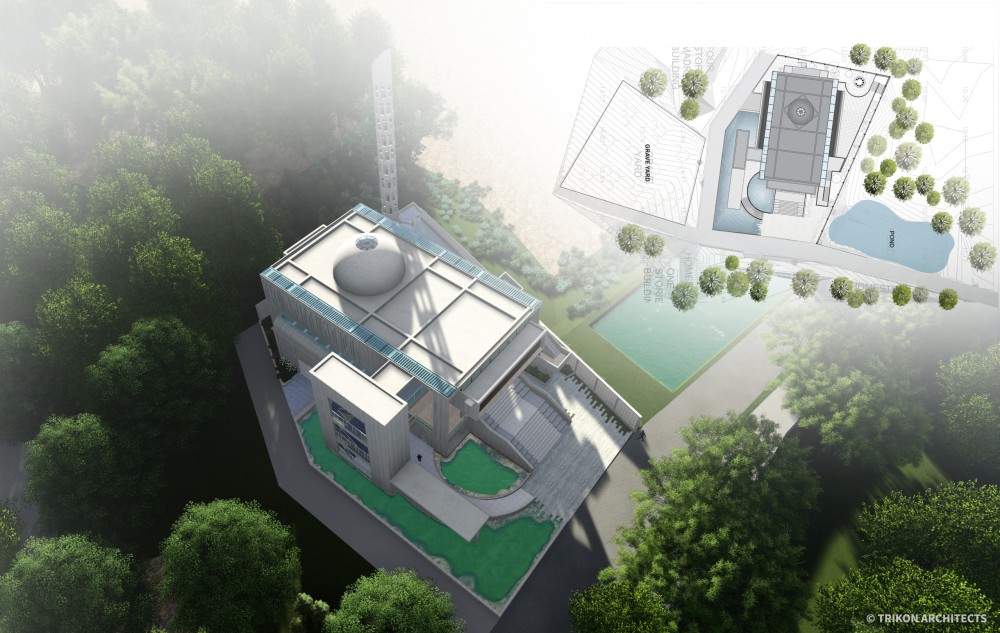
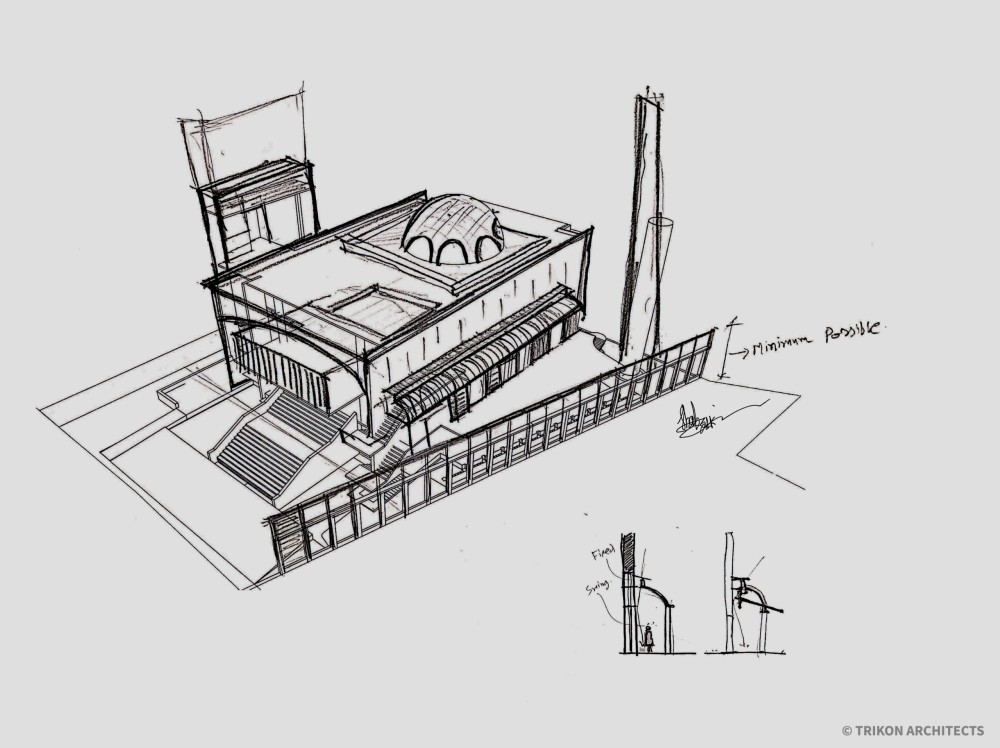
The primary shape of the mosque takes the form of a geometric rectangle, which seems the most effective since Muslims pray in straight rows facing a particular direction. A large cantilever porch is designed as an inviting entrance. The entry to the ablution space encircles a shallow body of water, while the water body separates the ablution space from the adjacent plaza, engaging microclimatic cooling. Another beautiful curved water feature surrounds the mosque's ablution area and staircase. The women's prayer hall is provided on the ground floor. A flight of steps directly leads to the men's prayer hall on two mezzanine levels.
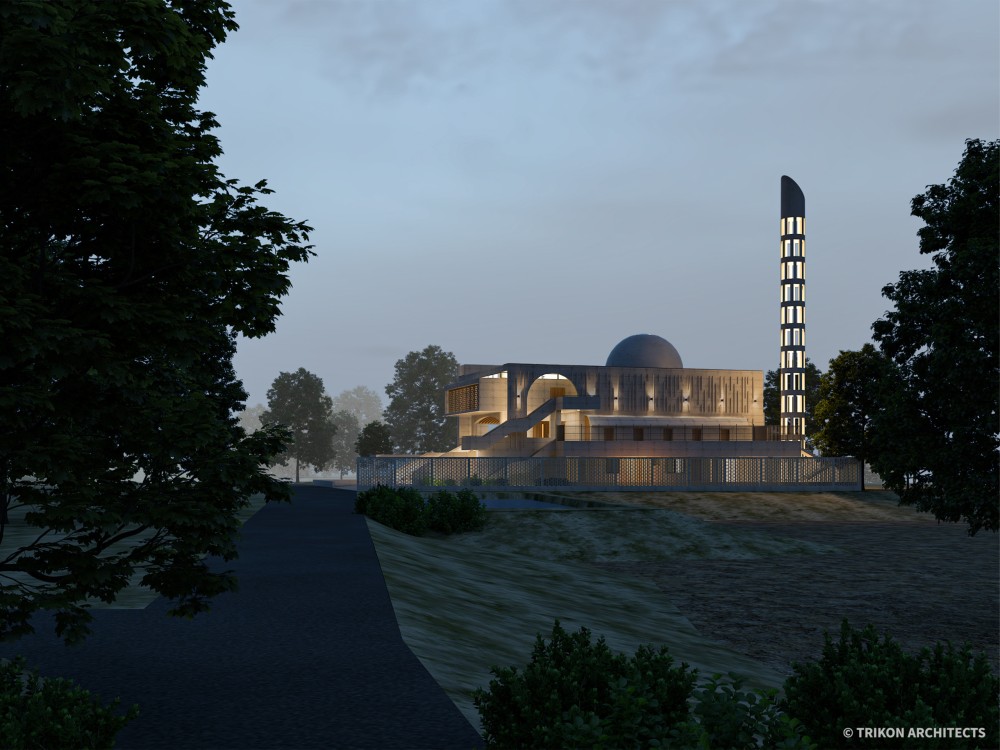
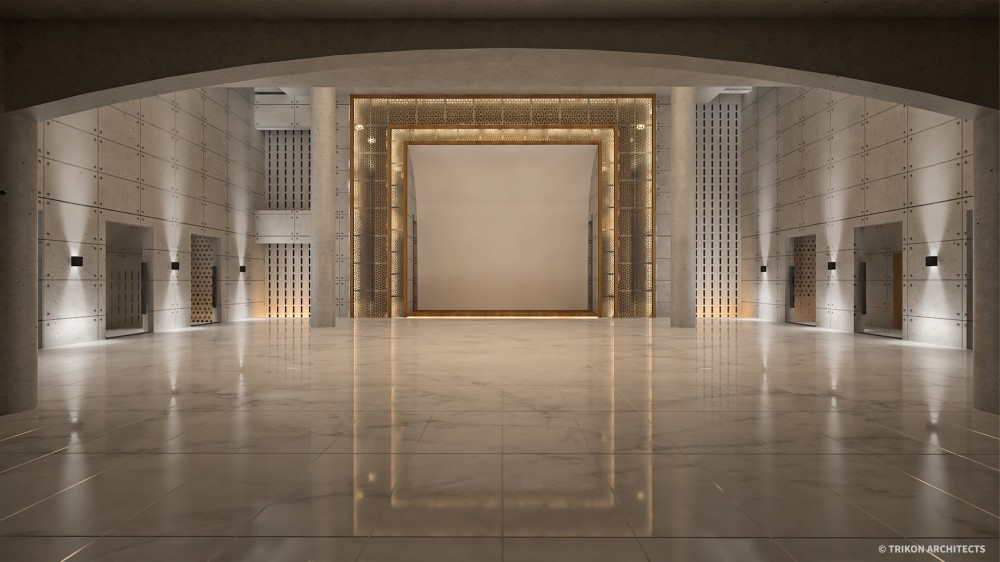
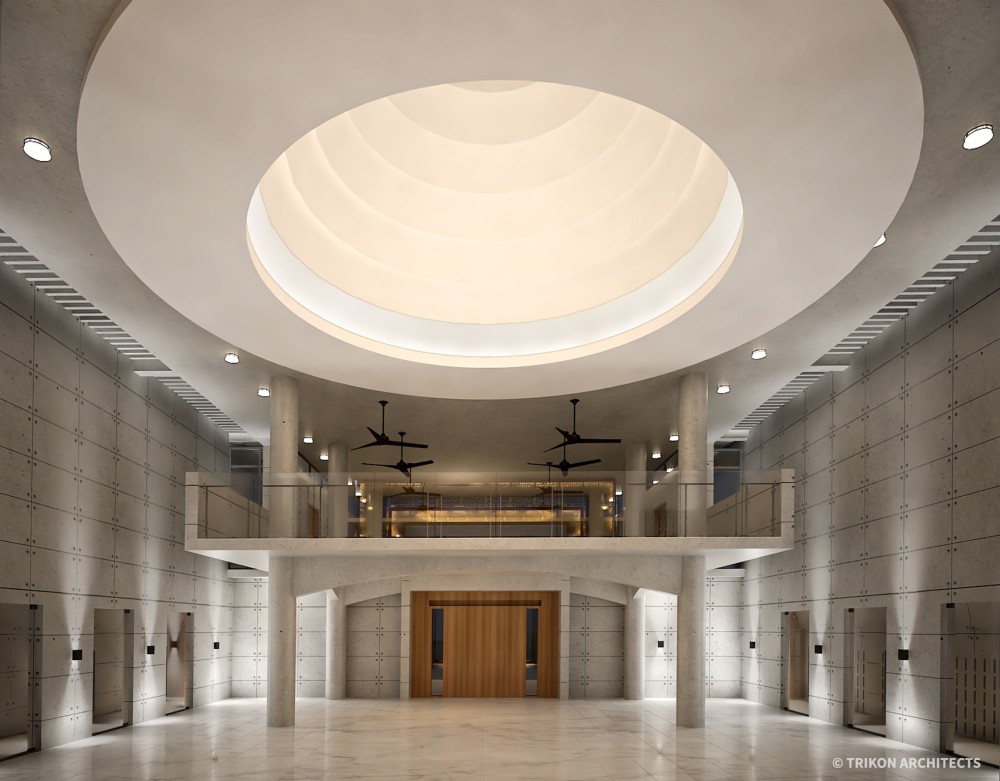
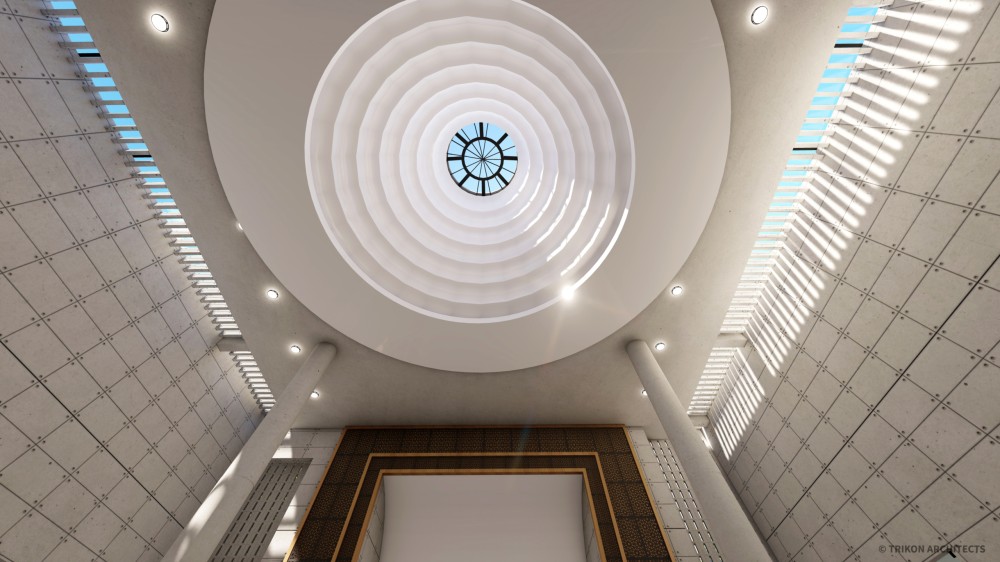
The climate of Bangladesh is very distinctive by nature due to its geographic location. This climatic condition has highly governed the design of this mosque. A dome is formed on the middle part of the main form, which is a traditional expression of a mosque. The central portion of the dome and the east and west portions of the roof are transparent to provide natural lighting as well as create an earthly connection with the sky, whereas the perforations on the north and south concrete walls filter light and noise coming from the outside. In addition, a lot of community space is designed on multiple levels, which is full of natural light and air.
In the northwest corner of the mosque is the "Minaret," a tower from which prayer calls are made. Traditionally, it was used for someone to call out to all Muslims to prayer from the top of the minaret. In a way, the minaret has become an icon of mosques; anyone searching for a mosque can come from afar.
As a whole, the as-cast concrete, large apertures, and less ornamental shape work together to create a new vocabulary for mosques that is simple but unique, bold but blending with the surroundings.