
Dhaka Residential Model College (DRMC)
Mohammadpur, Dhaka.
Client: Dhaka Residential Model College (DRMC)
Site Area: 45 Katha
Build Area: 30,000 Sft
Organizer: Institute of Architects Bangladesh (IAB) & Dhaka Residential Model College (DRMC)
Year Designed: 2025
Team Leader: Ar. Shafique Rahman (MIAB)
Design Team: Ar. Mashkura Chowdhury (MIAB), Ar. Md. Shazzadul Islam, Ar. Fatiha Tanjim Oni
3D Visualizer: Ar. Abdullah All Rayhan (AMIAB), Ar. Md. Al Amin Hossain, Ar. Al Muntasir Taj
Project Type: National Competition Entry
Documentation Team: Md. Shazzadul Islam
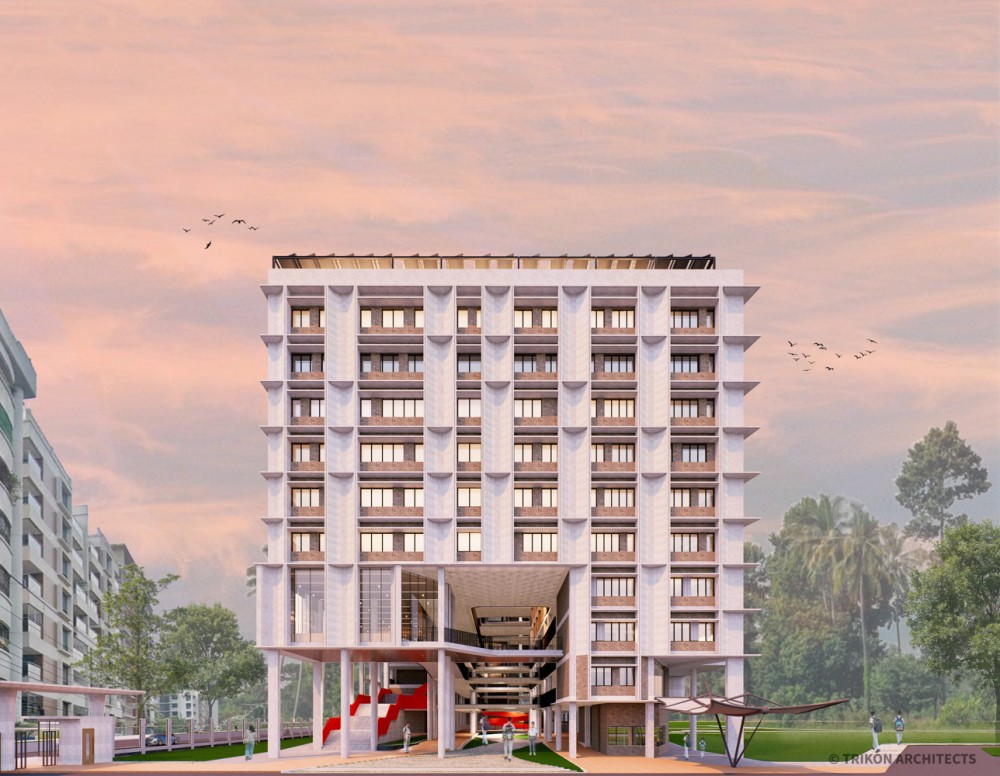
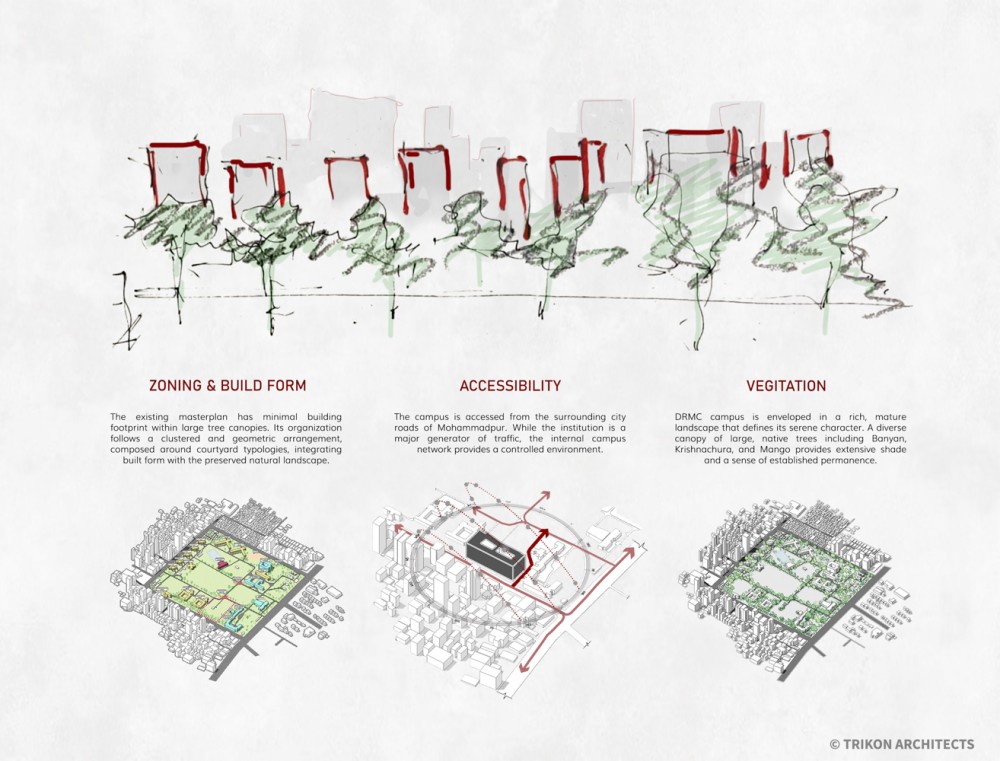
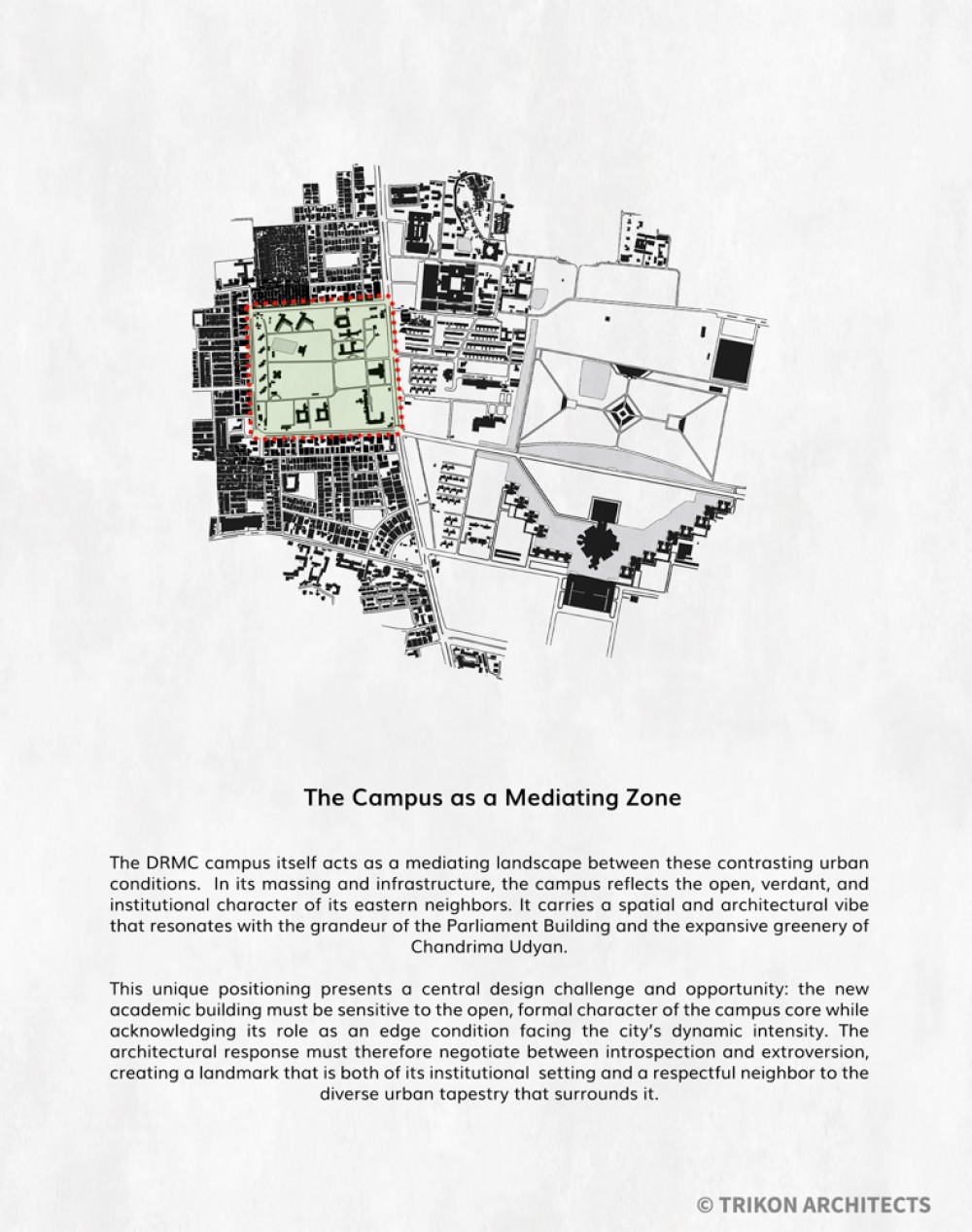
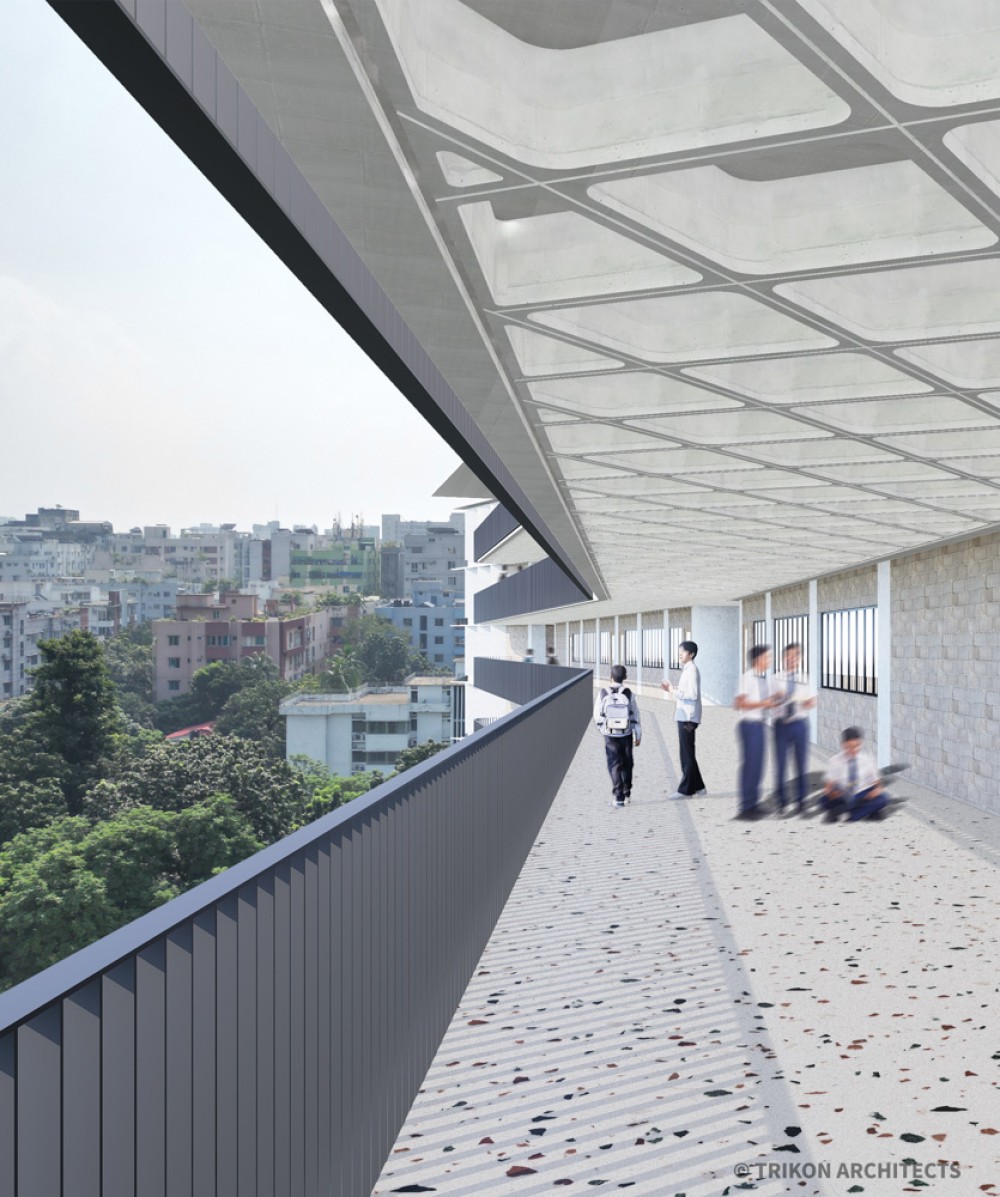
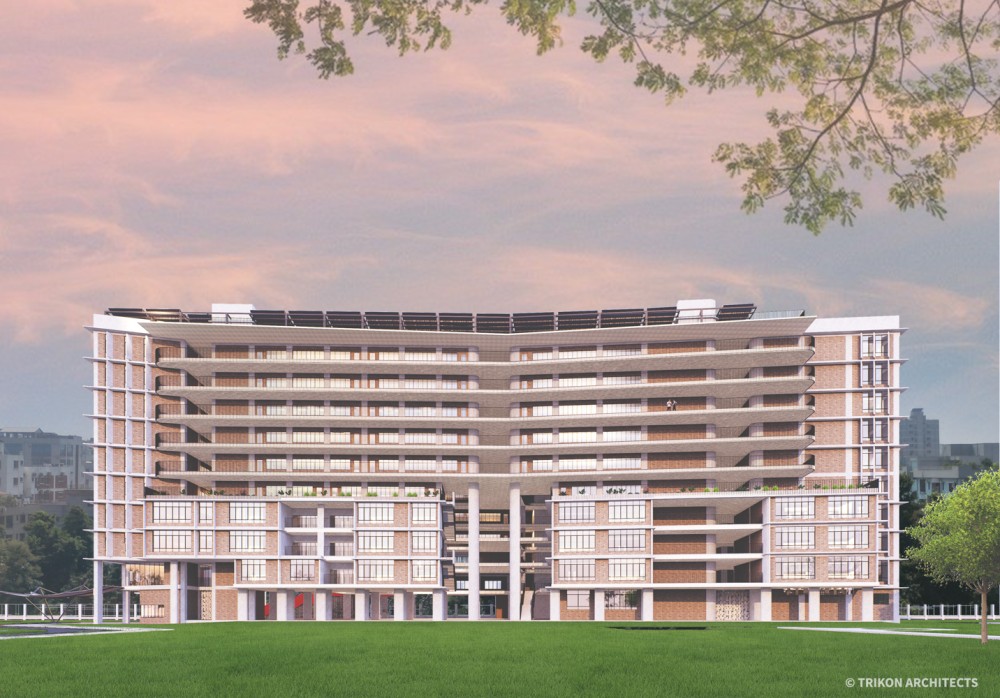
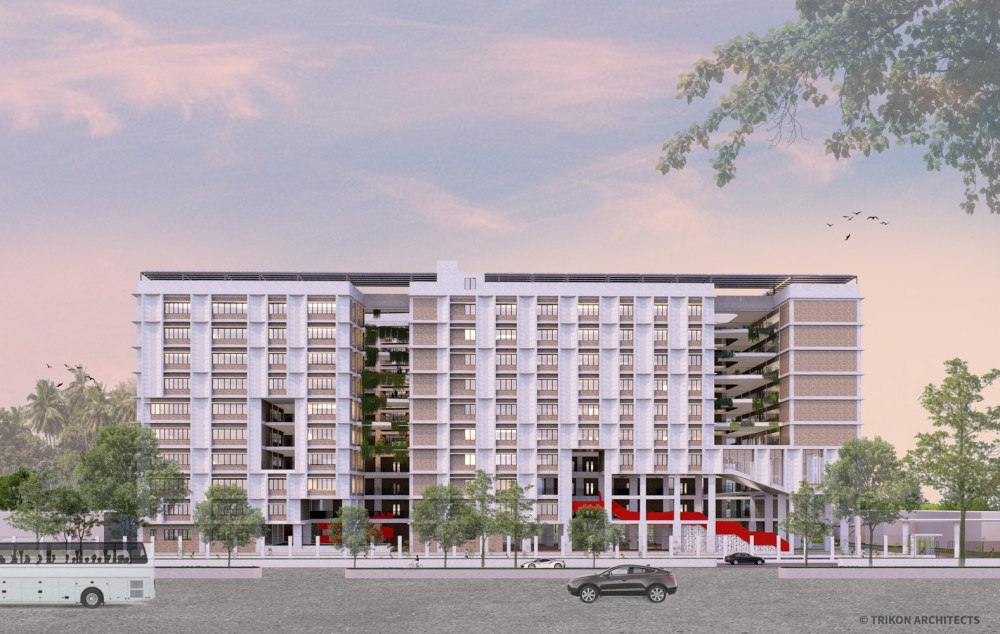
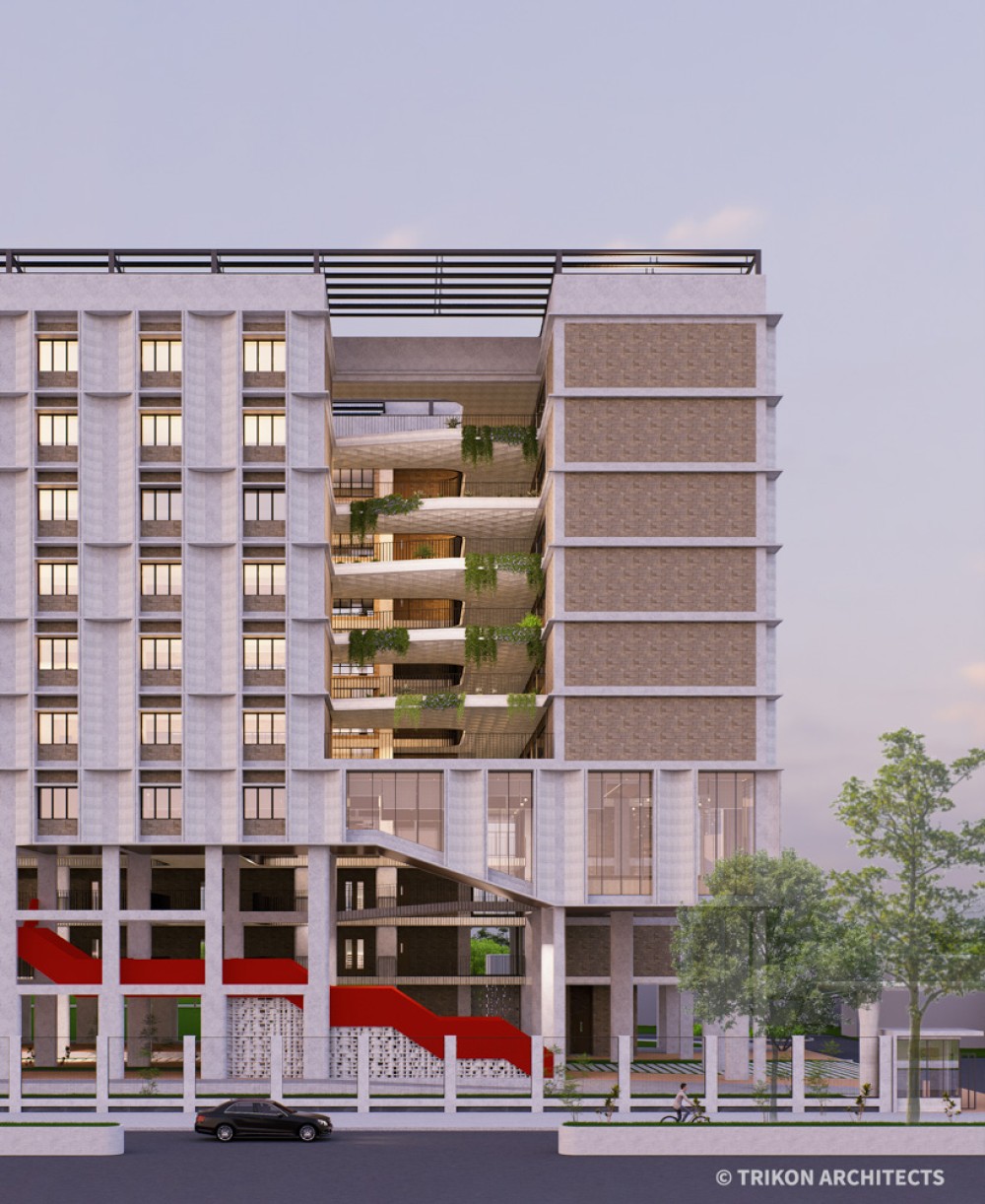
The proposed academic building for the historic Residential Model School campus is conceived not merely as a functional response, but as an architectural dialogue with its climate, heritage, and context. The site stands as one of the city's most valuable natural sanctuaries, preserving an extraordinary collection of century-old trees that form a continuous green canopy across the precinct. This rare expanse of mature vegetation, interwoven with ponds, courtyards, and pathways, embodies the city's ecological memory, an inherited landscape that predates much of the surrounding urbanization. While dense high-rise developments press against its periphery, the site retains an almost park-like atmosphere, offering a striking contrast to the verticality and congestion of the adjacent city blocks. The large, interconnected green spaces provide not only microclimatic relief, lowering ambient temperatures, filtering dust, and enhancing air quality, but also define the spatial logic of the master plan itself.
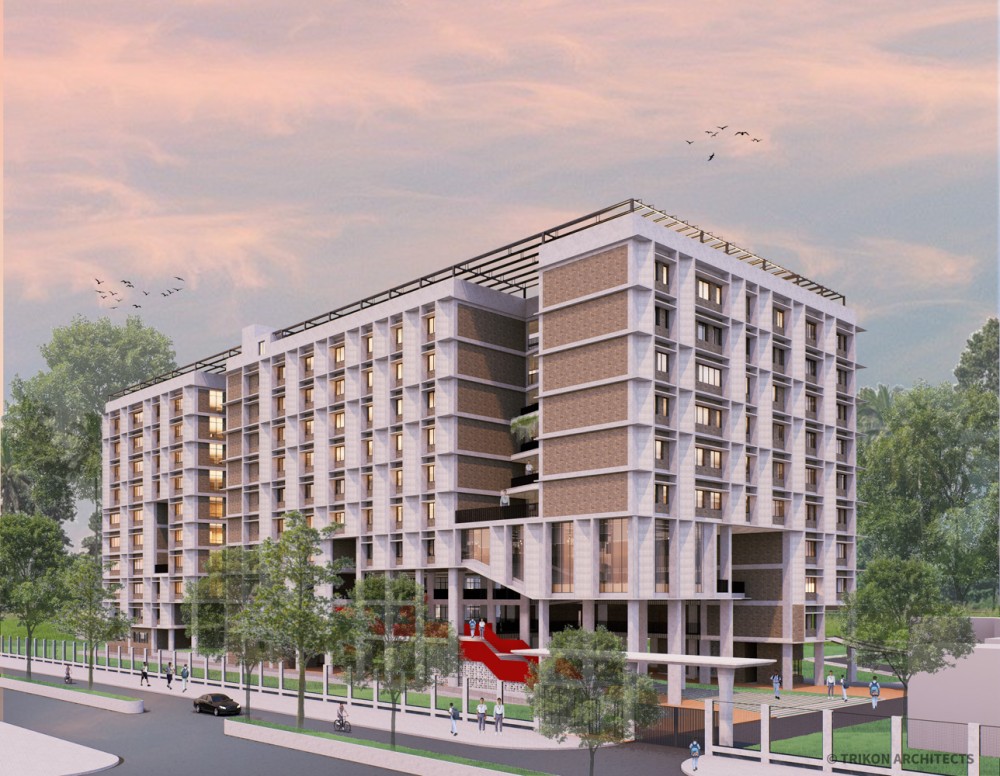
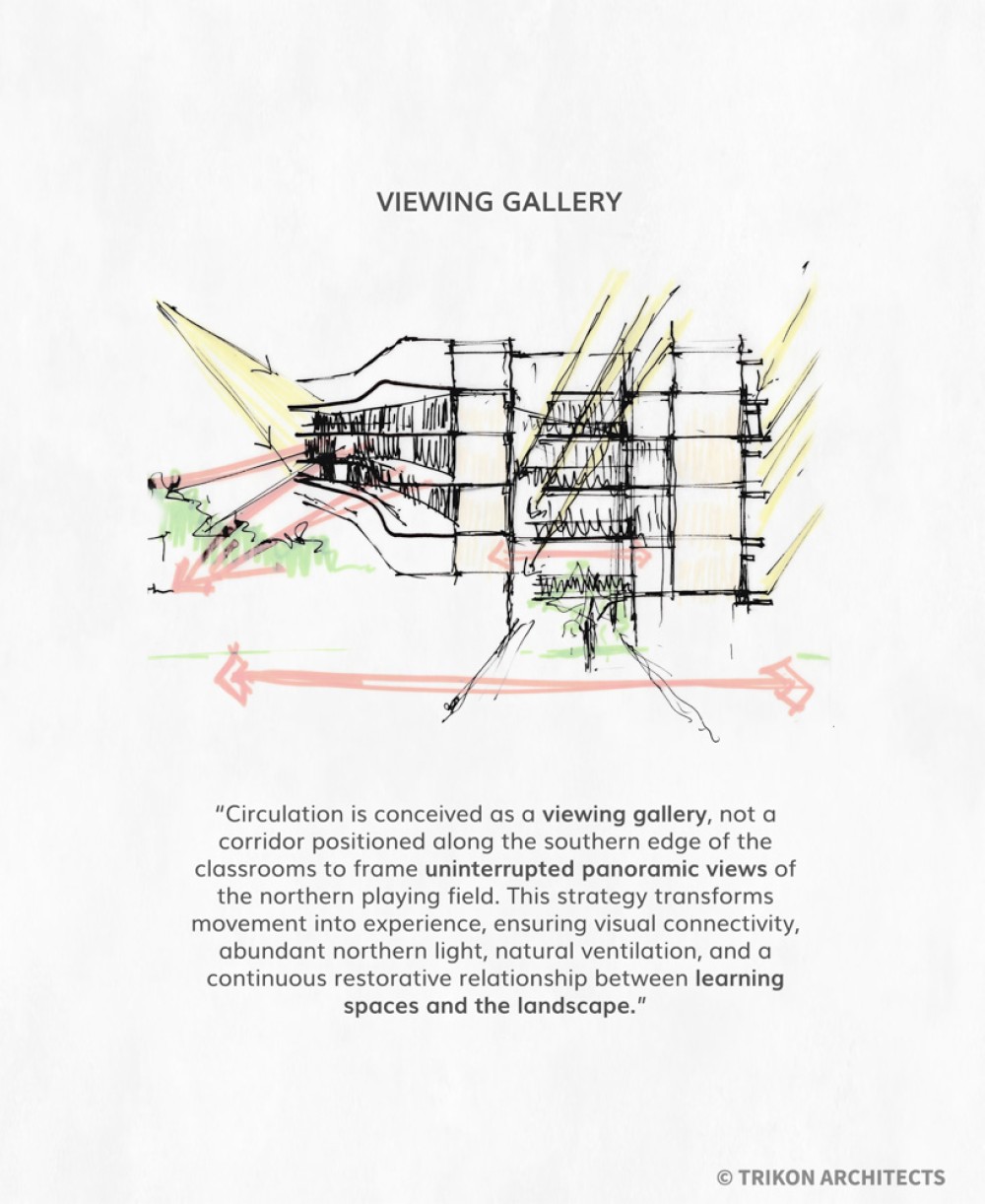
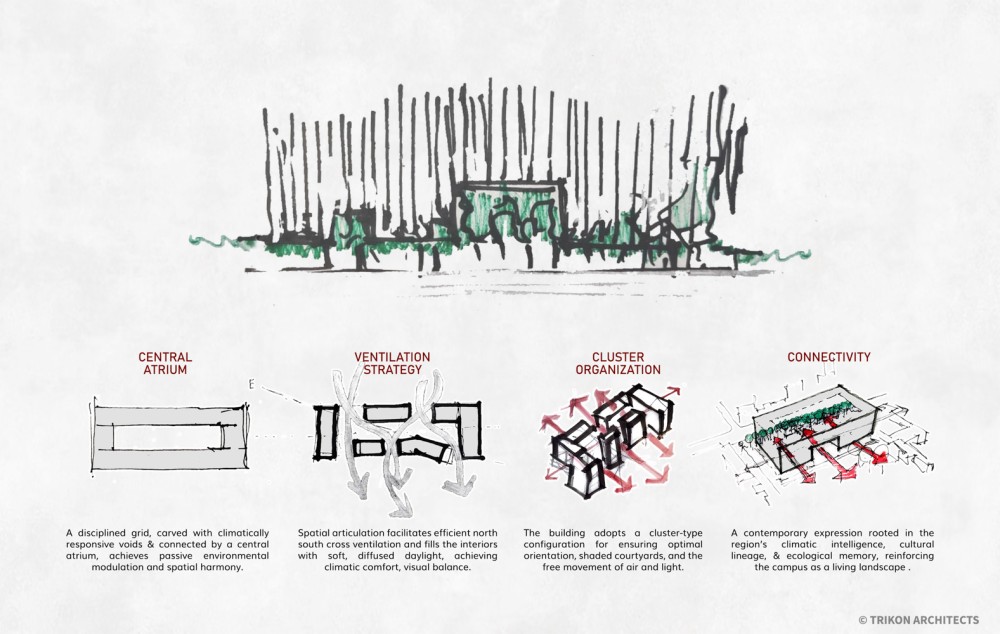
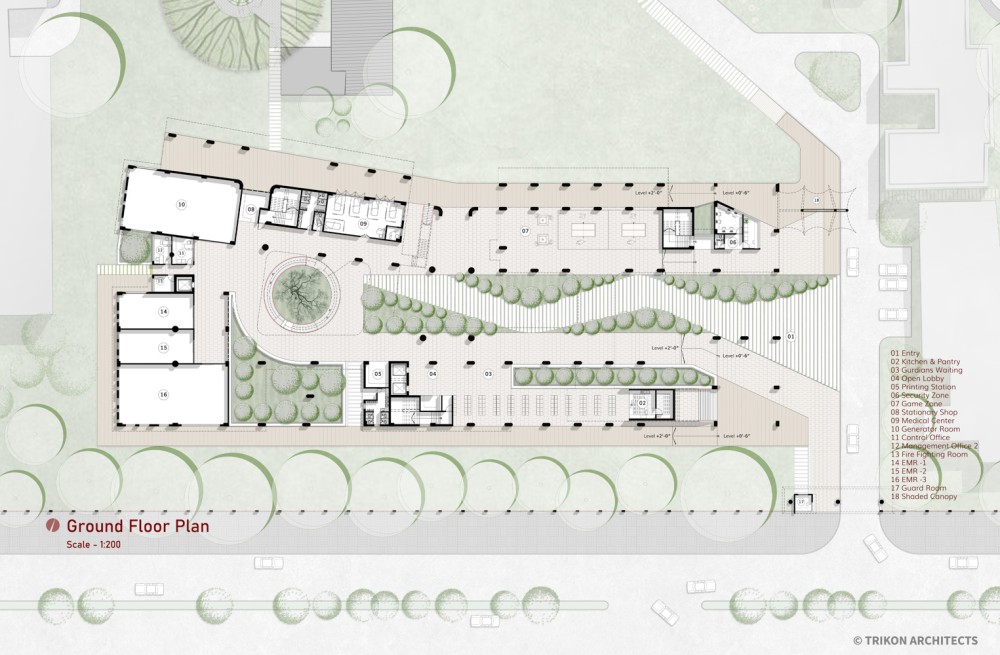
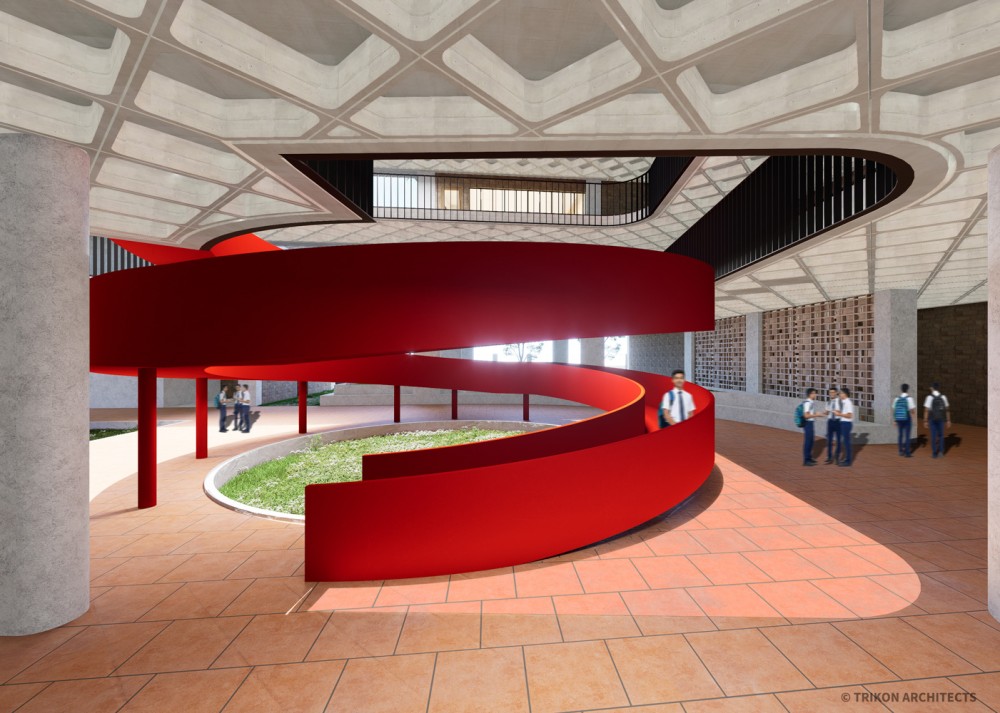
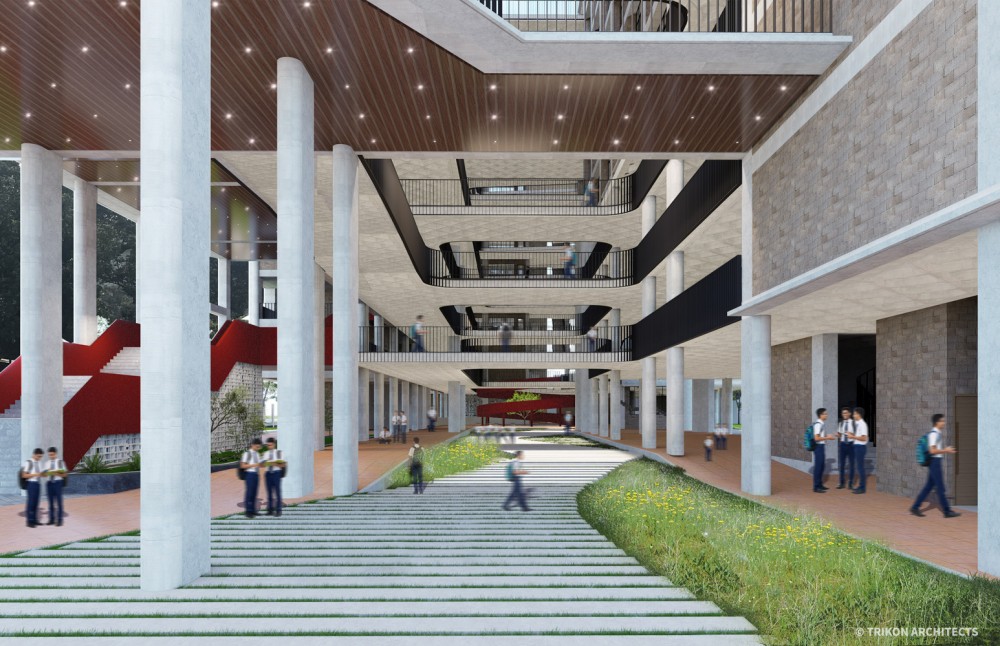
The immediate surroundings, anchored by modern masterpieces such as Louis I. Kahn's National Assembly and the seminal works of Architect Muzharul Islam, establish a profound architectural lineage. This project positions itself within that continuum, engaging with their spatial discipline and geometric clarity while interpreting their enduring principles through a contemporary lens. The design evolves from a strong geometrical grid, where plans are organized along clear axes and proportional order. This geometry serves as both a planning framework and a subtle homage to the rational modernist grammar embedded in the site's prestigious landscape. In the design process, the rigid volume was strategically carved with a series of voids connected through a central atrium, transforming the solid mass into a porous architectural form. This spatial articulation facilitates efficient north-south cross-ventilation and fills the interiors with soft, diffused daylight, achieving climatic comfort, visual balance, and spatial harmony.
The building adopts a cluster-type configuration, ensuring optimal orientation, shaded courtyards, and the free movement of air and light. This approach draws inspiration from Bangladesh's vernacular courtyard typologies, reinterpreted within a modern academic framework to encourage interaction, adaptability, and a sense of community. Ultimately, the proposal seeks to harmonize architecture and environment, a contemporary expression rooted in the region's climatic intelligence, cultural lineage, and ecological memory, reinforcing the campus as both an institution of learning and a living landscape of heritage.